

Categories
Living in Placer County, Living In Sacramento, Moving to California, real estate, Relocation, Sacramento Real EstatePublished March 17, 2026
Sacramento’s $58 Billion 2050 Plan: What It Means for Housing, Jobs, and Growth


The $58 Billion Blueprint That Will Shape Sacramento Through 2050
Prefer to Watch Instead?

Before we break this down, you can watch the full video here:
👉 Watch the Full Video on YouTube
Sacramento’s Future Has Already Been Planned
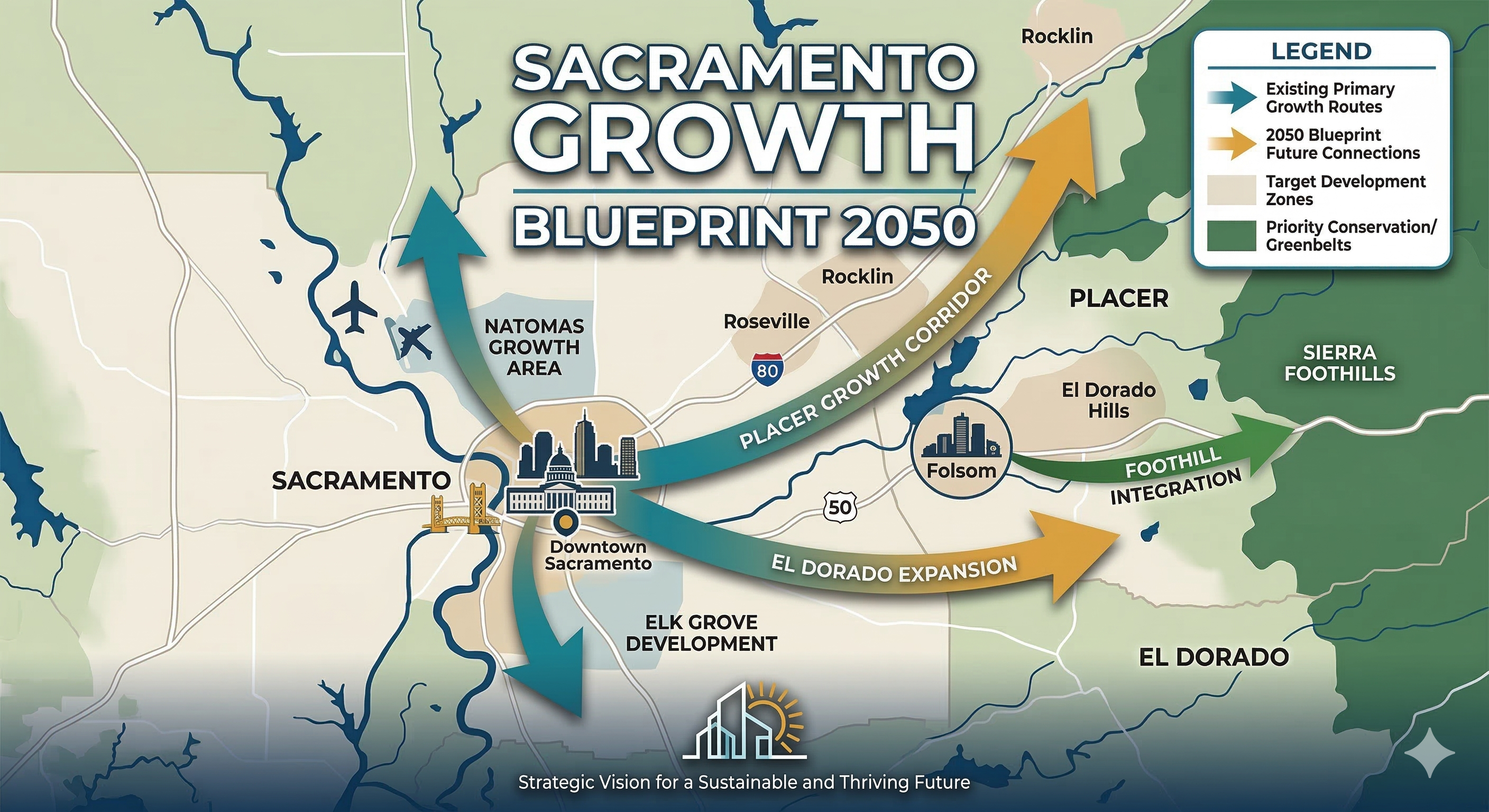
A lot of people living in the Greater Sacramento area have no idea that the region’s future has already been outlined on paper.
In November 2025, regional planners approved a 25-year blueprint that determines where billions of dollars in infrastructure spending will go, where housing will be built, and how transportation will evolve through 2050.
The plan outlines:
- $58 billion in transportation investment
- 278,000 new homes
- 263,000 new jobs
- 580,000 new residents
If you’re buying, selling, or investing in the Sacramento region, this isn’t just a planning document. It’s essentially a roadmap for how the region expects to grow over the next 25 years.
After living here nearly 50 years and helping families buy and sell homes here for over two decades, one of the biggest ways we help clients make smart long-term decisions is by understanding where the region is heading.
And plans like this give us a pretty clear signal.
What Is the Sacramento Blueprint?
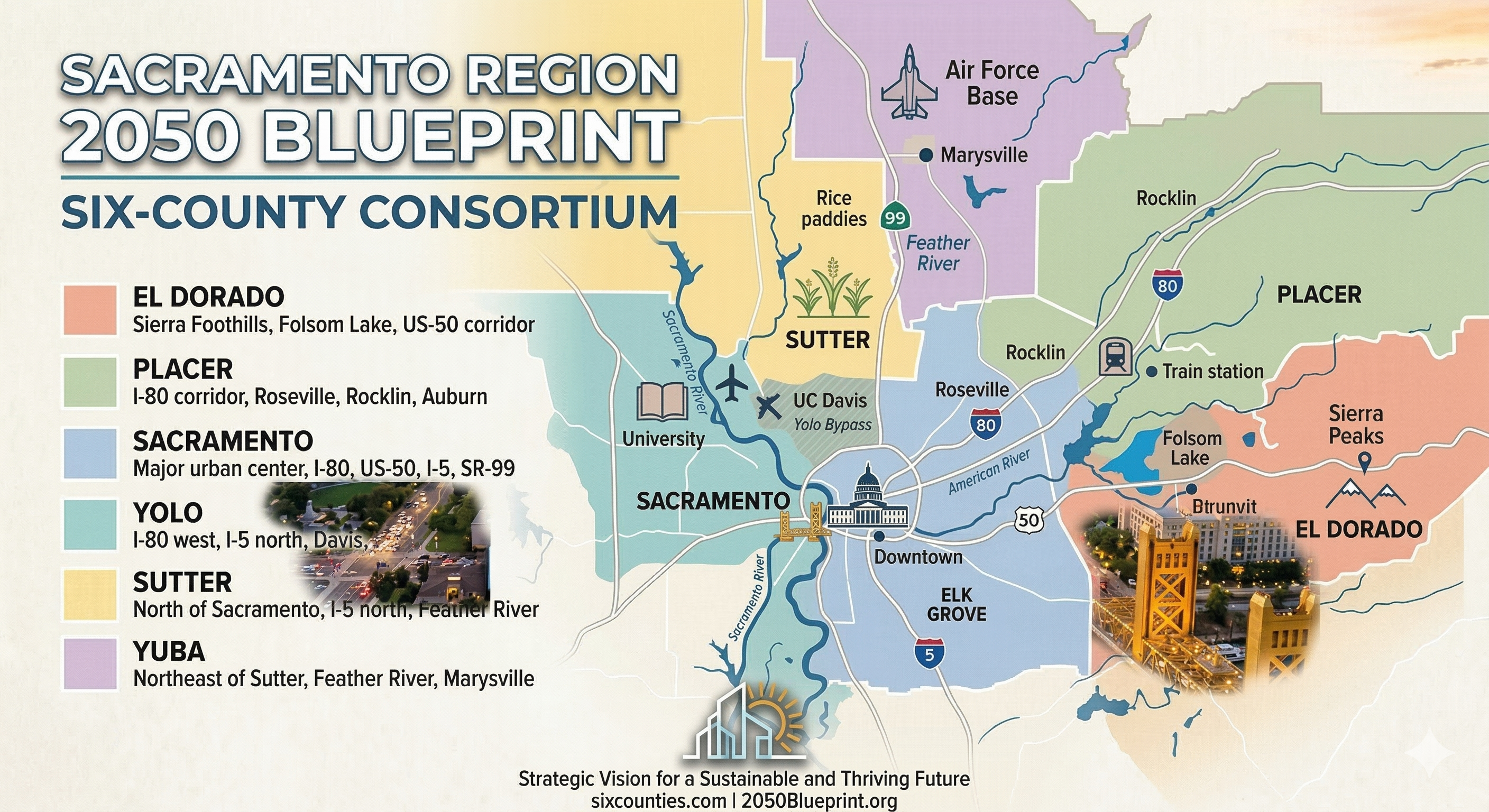
The official name of this plan is the Metropolitan Transportation Plan and Sustainable Communities Strategy (MTP/SCS).
It covers a six-county region including:
- Sacramento County
- Placer County
- El Dorado County
- Yolo County
- Yuba County
- Sutter County
The plan was approved by the Sacramento Area Council of Governments (SACOG) after several years of research, environmental review, and negotiations between cities and counties across the region.
By law, regional planners must update this long-range plan every four years.
The plan must accomplish four things:
- Show how people will move around the region
- Be financially realistic
- Help meet environmental goals
- Coordinate with local city planning
At its core, this blueprint is answering a few big questions: where will people live, where will jobs be located, and how will people get around?
Sacramento’s Population Is Expected to Grow Fast
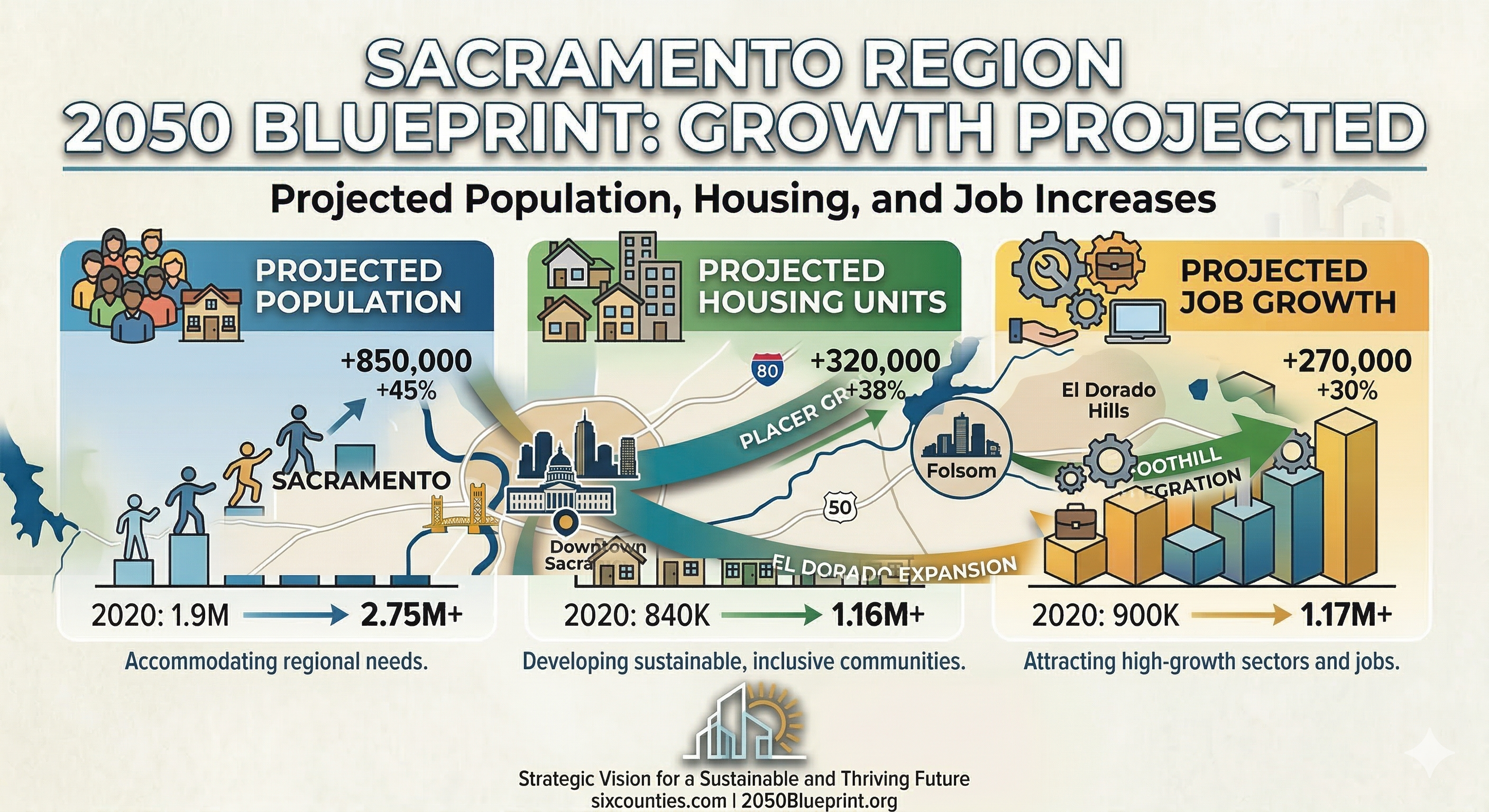
Between now and 2050, the region is expected to add:
- 580,000 people
- 278,000 homes
- 263,000 jobs
To put that into perspective, that’s essentially the equivalent of adding another Sacramento-sized city to the region.
The blueprint is trying to determine how we manage that growth without turning the entire freeway system into gridlock.
Where the $58 Billion Comes From

The plan forecasts about $58.4 billion in transportation investments over the next 25 years.
That money comes from three main sources.
Federal Funding
This includes highway programs, bridge programs, transit grants, and congestion mitigation funds.
State Funding
This includes California transportation programs, SB1 gas tax funding, active transportation grants, and transit and rail programs.
Local Funding
This is actually the largest portion of the funding and includes sales taxes, gas taxes, transit fares, and local transportation measures.
Overall funding breakdown:
- Federal: about 15%
- State: about 26%
- Local: about 59%
In other words, the majority of this plan will ultimately be funded locally.
A Major Shift in How Sacramento Will Grow
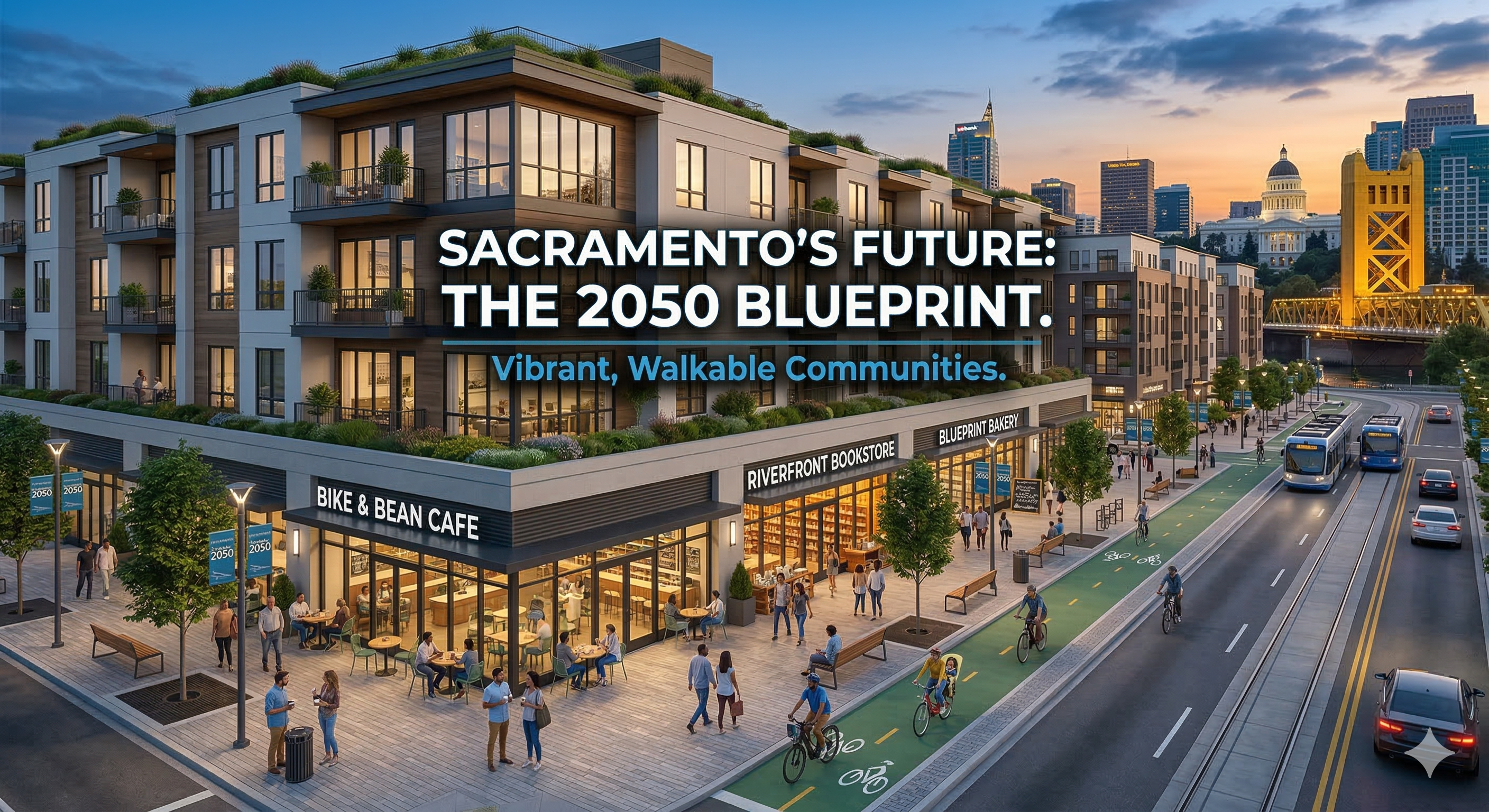
Historically, Sacramento grew through large suburban developments expanding outward.
But this new blueprint shifts the strategy.
Instead of endless suburban sprawl, the region plans to focus more on:
- Infill development
- Mixed-use communities
- Townhomes and apartments
- Smaller lot homes
- Transit-oriented neighborhoods
The forecast suggests that by 2050:
- Two-thirds of new homes will be built within existing communities
- One-third of new homes will be built in developing areas
This means many existing neighborhoods may see new housing, redevelopment, and increased density over time.
Major Placer County Projects Already Underway
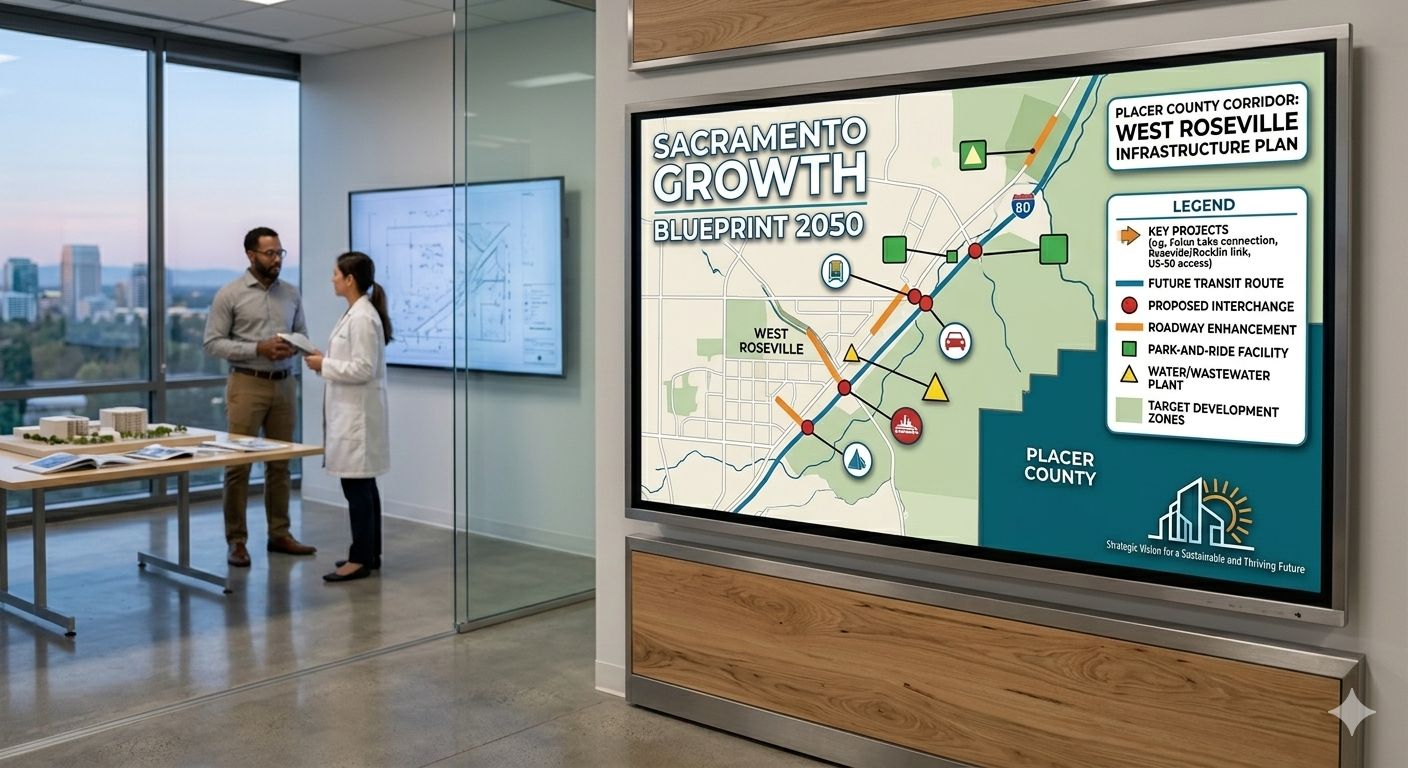
This blueprint isn’t just theoretical. Many projects are already moving forward.
Several major projects are underway to support growth in western Placer County.
These include:
- Placer Parkway construction
- Fiddyment Road widening
- Dry Creek Greenway trail expansion
- Watt Avenue bridge replacement
These improvements support growth in areas such as:
- West Roseville
- Lincoln
- Rocklin
- Placer One development area
If you own property or are considering buying in western Placer County, these are the types of projects that can shape commute patterns, access, and long-term appeal.
Sacramento County Is Leaning Into Transit and Managed Lanes
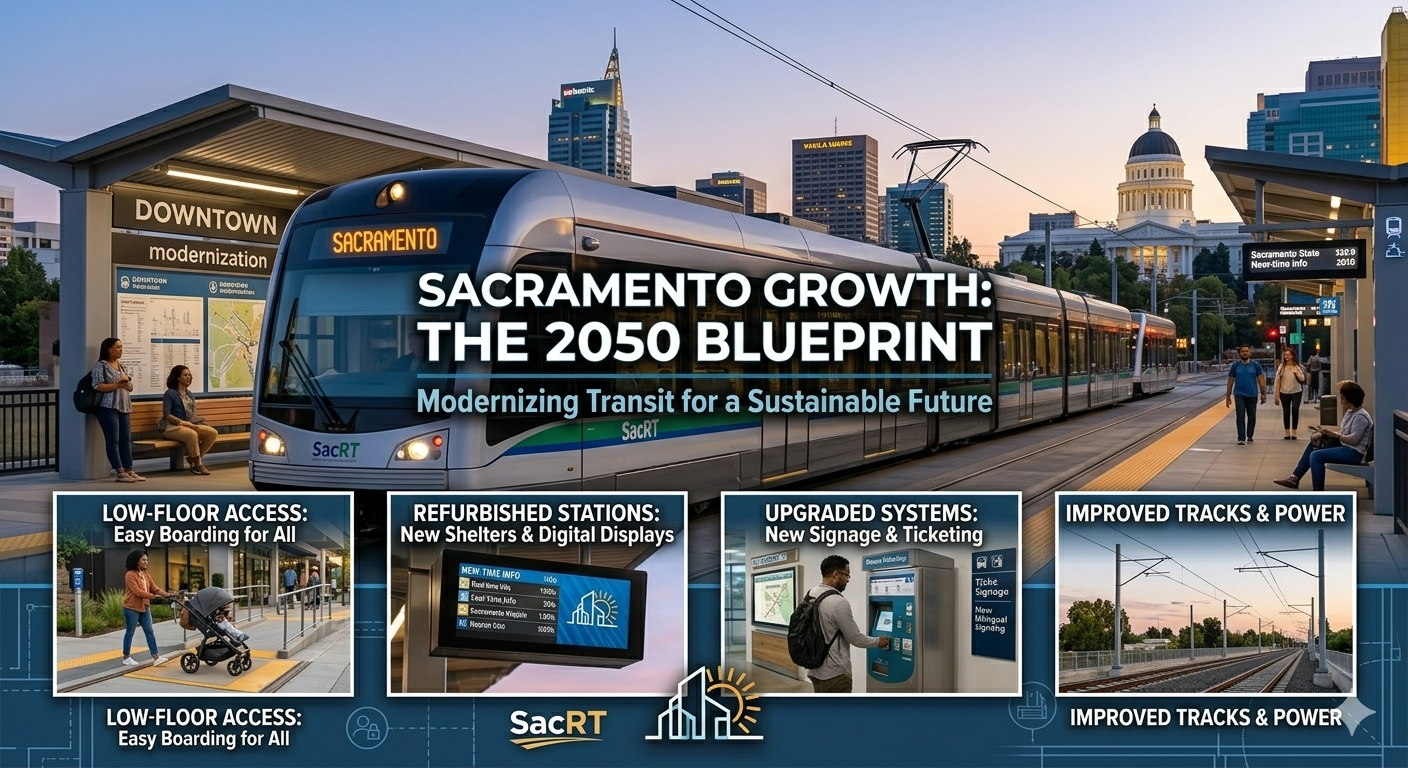
Sacramento County’s focus is heavily centered around transit improvements and freeway upgrades.
Major projects include:
- Dos Rios Light Rail Station
- New low-floor light rail trains
- Transit system modernization
- Future Green Line extension to Sacramento International Airport
- Managed lanes on major freeways
By 2050, the plan envisions nearly 200 miles of managed lanes across major corridors including:
- Interstate 80
- Interstate 5
- Highway 50
These lanes could involve tolling or congestion pricing to maintain traffic flow.
The First Major Toll Lane Example Is Already Happening
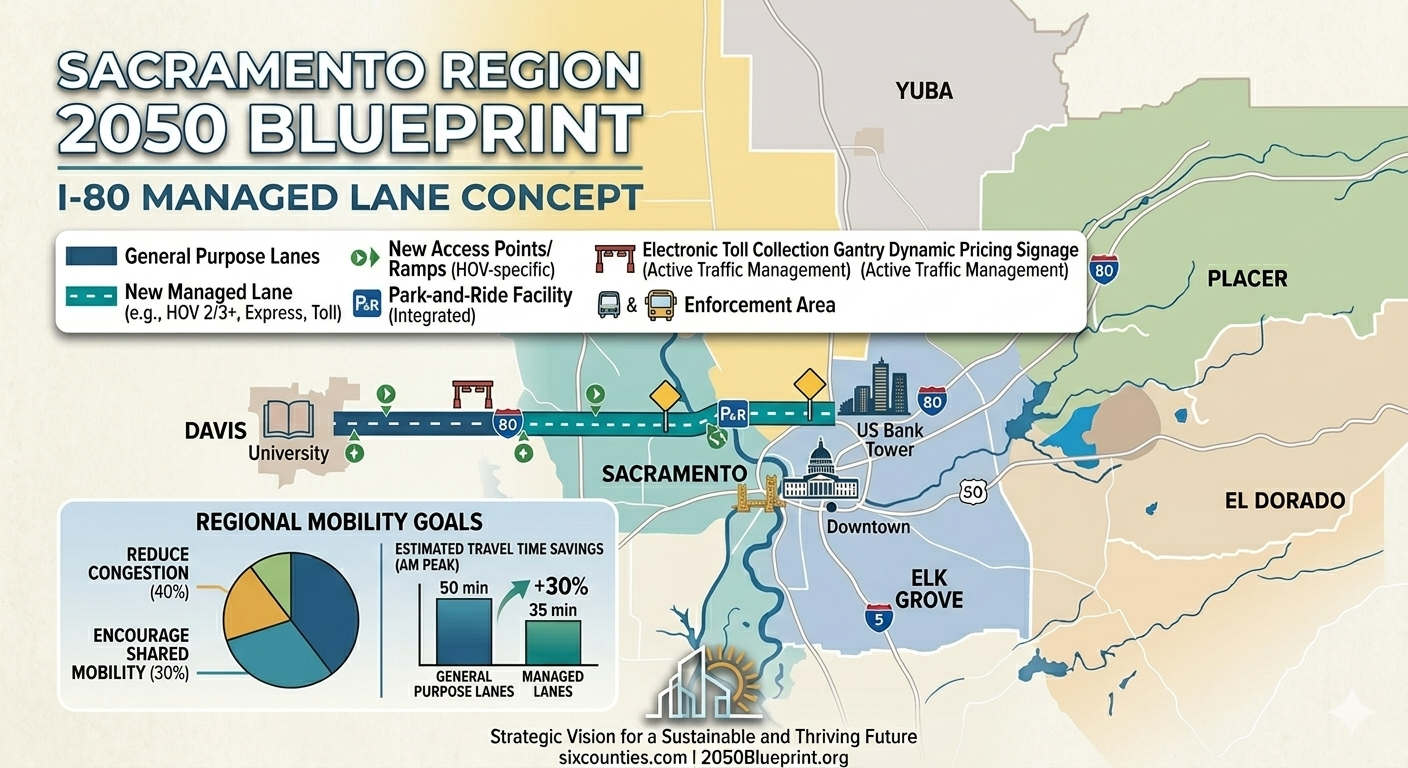
The region’s first example of managed lanes is already underway.
The I-80 Managed Lane Project between Sacramento and Davis began construction in 2025 and is expected to be completed around 2027.
This project will introduce toll lanes designed to maintain more consistent traffic speeds during peak travel times.
That gives us a pretty good preview of what future freeway management could look like across more of the region.
El Dorado County’s Growth Will Be More Focused and Strategic
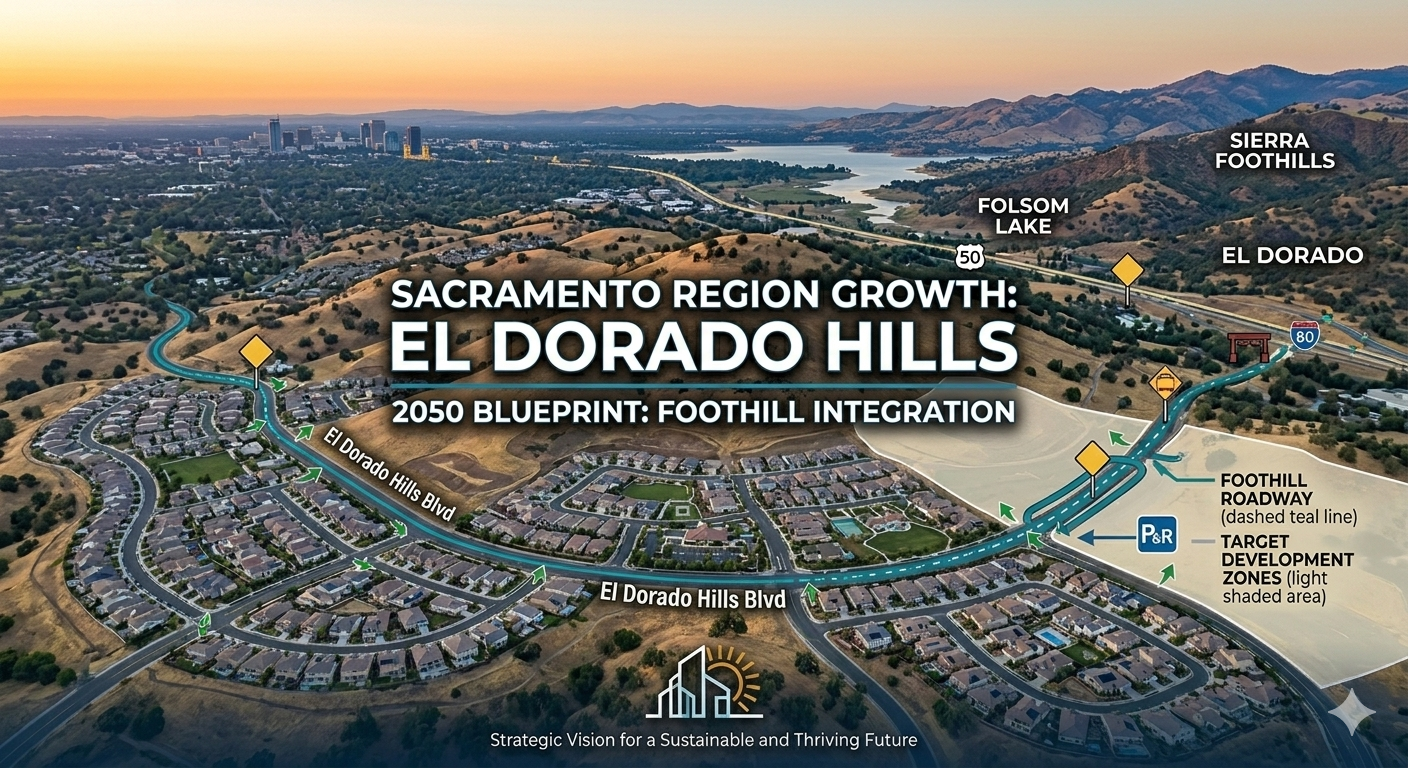
El Dorado County’s role in the blueprint is a little different.
Rather than massive new freeway projects, the plan prioritizes:
- Safer road corridors
- Bike lane expansion
- Improved connectivity between communities
Growth areas include:
- El Dorado Hills
- Bass Lake Hills
- Carson Creek
- Valley View
These areas already have master-planned communities in place and will continue expanding over time.
The broader goal is to direct growth into already identified communities instead of letting it spread randomly across the foothills.
The Plan Is Ambitious, but There Are Real Risks
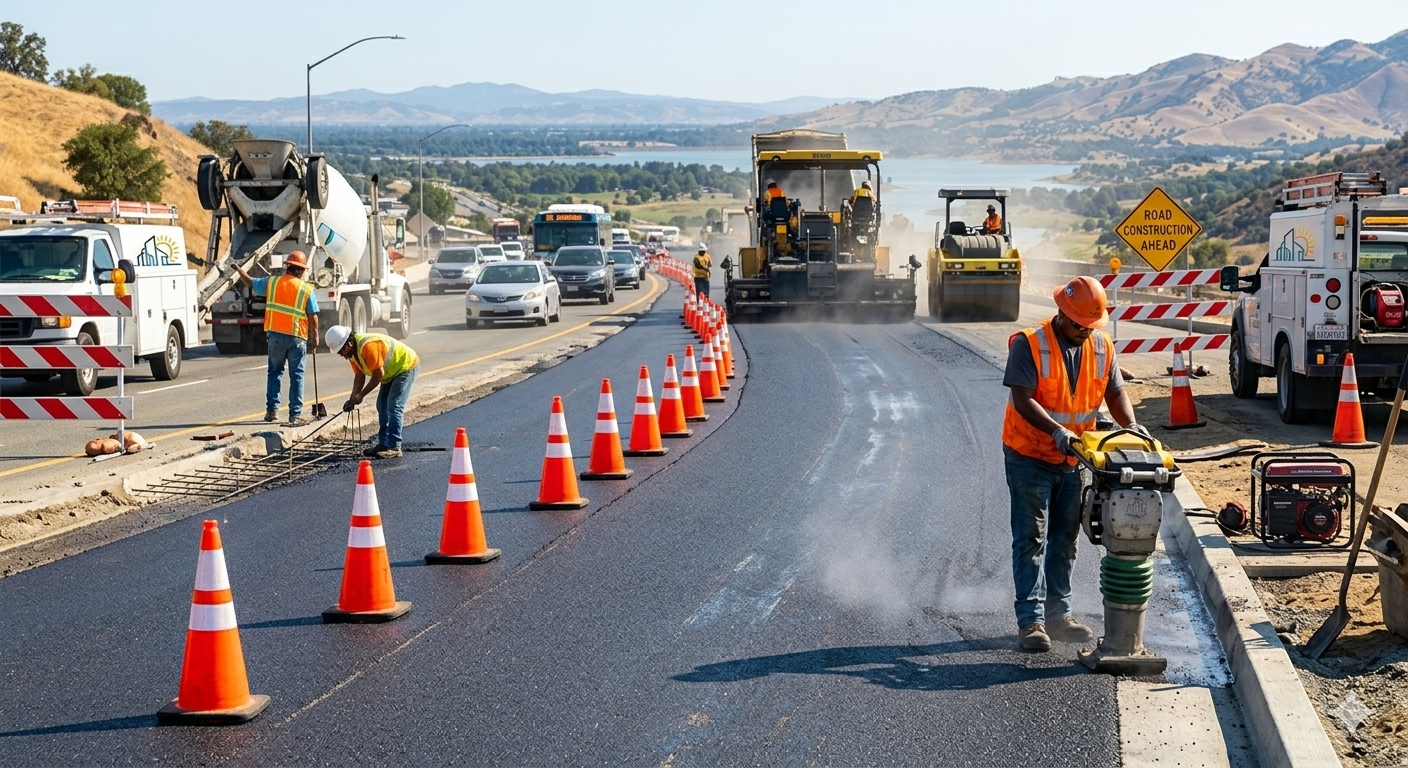
While the blueprint is ambitious, there are several real challenges baked into it.
Road Maintenance
Even with billions in funding, cities across the region still face large maintenance backlogs. Delaying road repairs often makes them significantly more expensive later.
Funding Assumptions
The plan assumes several funding sources that have not yet been approved, including:
- New transportation sales taxes
- Potential road usage fees
- Expanded toll lanes
If voters reject these measures, some projects could be delayed or scaled back.
Development Timing
Not every planned community will be built as quickly as predicted. Some projects may take decades to fully materialize.
That means this blueprint is best viewed as a strong signal, not a guarantee.
What This Means for Homeowners, Buyers, and Investors
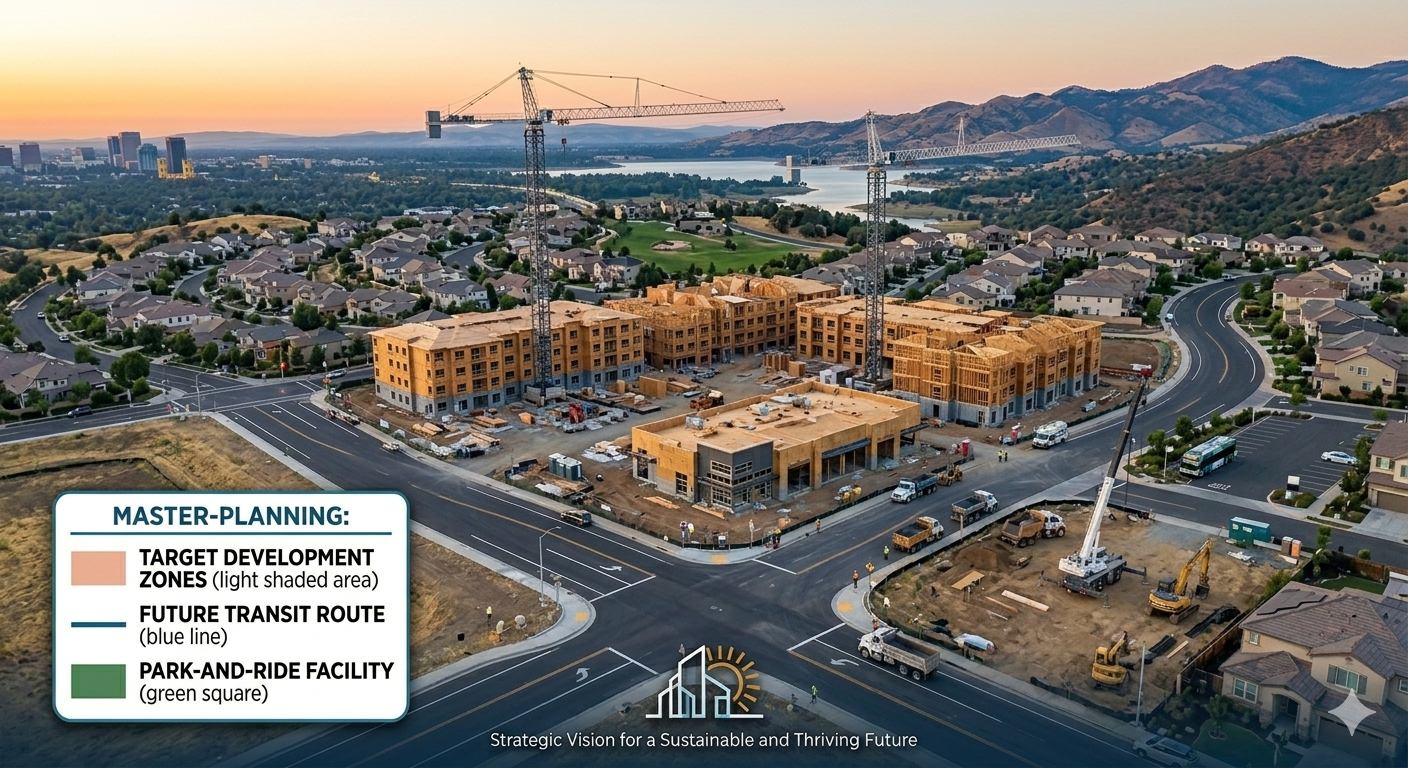
For current homeowners, this blueprint suggests several long-term trends.
Over time, we may see:
- Increased housing density in existing areas
- More transit improvements
- Expanded bike and pedestrian infrastructure
- Road and interchange upgrades
While construction can cause short-term disruptions, improved infrastructure often supports long-term property values.
For buyers and investors, this plan can help identify which areas may benefit most from future public investment, improved access, and stronger long-term demand.
Areas Expected to See Major Growth
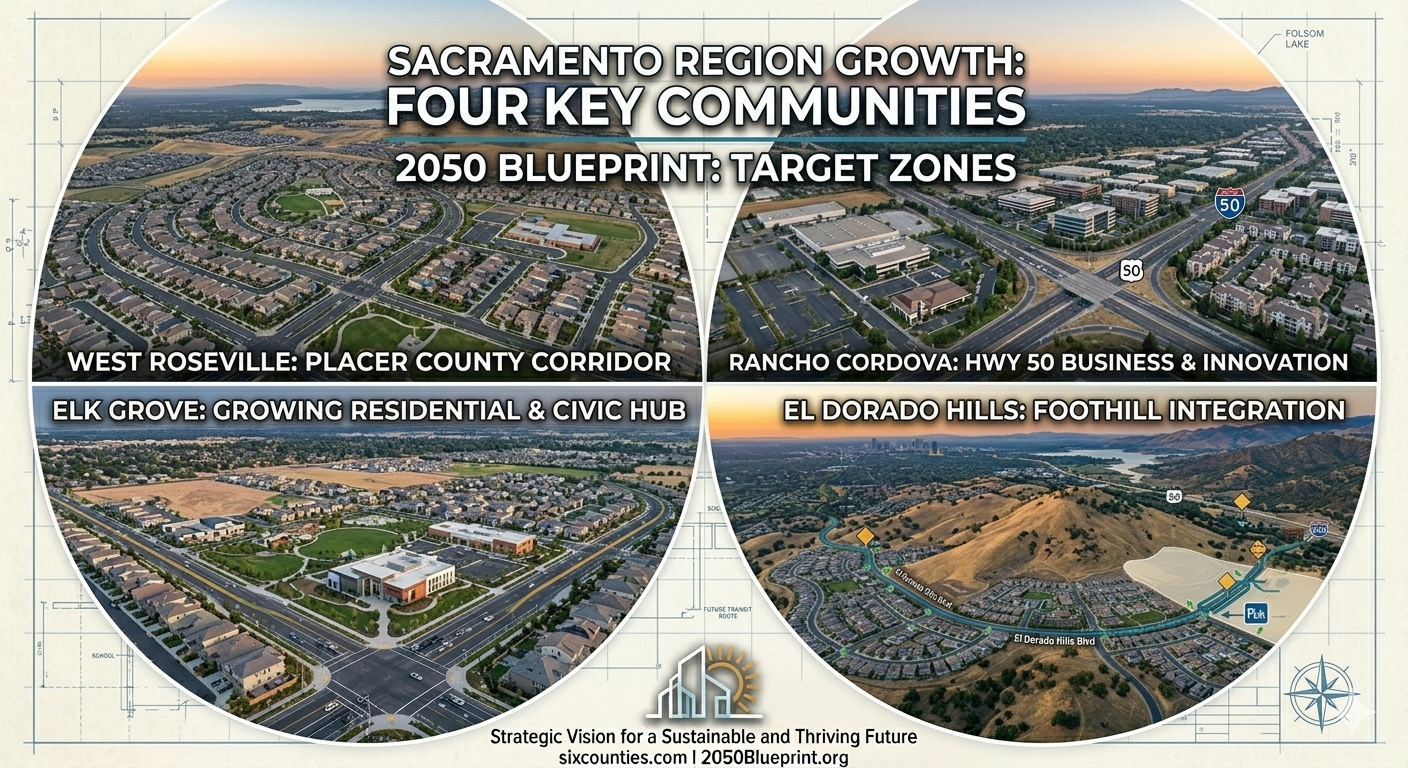
Based on this blueprint, several areas stand out as long-term growth corridors.
These include:
- West Roseville
- Western Placer County
- Rancho Cordova Innovation District
- Elk Grove Southeast expansion area
- El Dorado Hills planned communities
These areas are expected to receive both housing development and infrastructure investment.
That combination tends to matter a lot when you’re thinking about long-term livability, resale potential, and investment timing.
Final Thoughts
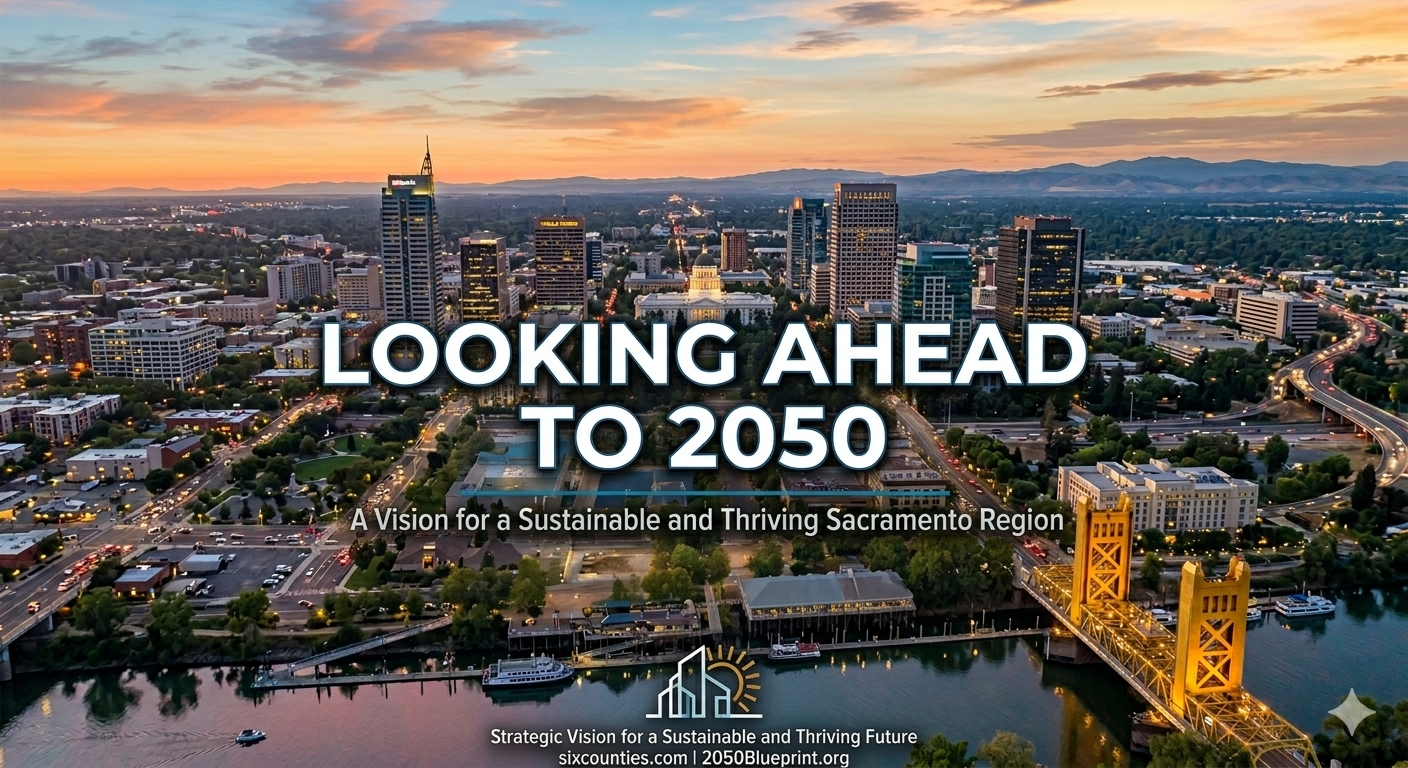
The 2025 Sacramento Blueprint is essentially the region’s long-term growth strategy.
It outlines where housing will be built, where infrastructure will expand, and how transportation will evolve.
While plans like this are not guarantees, they offer valuable insight into where the region expects to invest resources over the next several decades.
For buyers, sellers, and investors, understanding those signals can help guide smarter real estate decisions.
Download My Greater Sacramento Relocation Guide
If you’re thinking about moving to the Sacramento region and want a deeper understanding of neighborhoods, schools, commute patterns, and lifestyle, I put together a free relocation guide to help.
👉 Download the Greater Sacramento Relocation Guide
Thinking About Buying or Selling in Sacramento?
If you’re considering buying, selling, or investing in Sacramento real estate, feel free to reach out.
We can walk through:
- Neighborhood strategy
- Growth areas
- Market conditions
- Long-term planning considerations
You can text or call me directly at 916-425-786.
Happy to help you make a smart move with the long game in mind.
or another way