

Published December 13, 2021
Winterizing your home for WINTER!

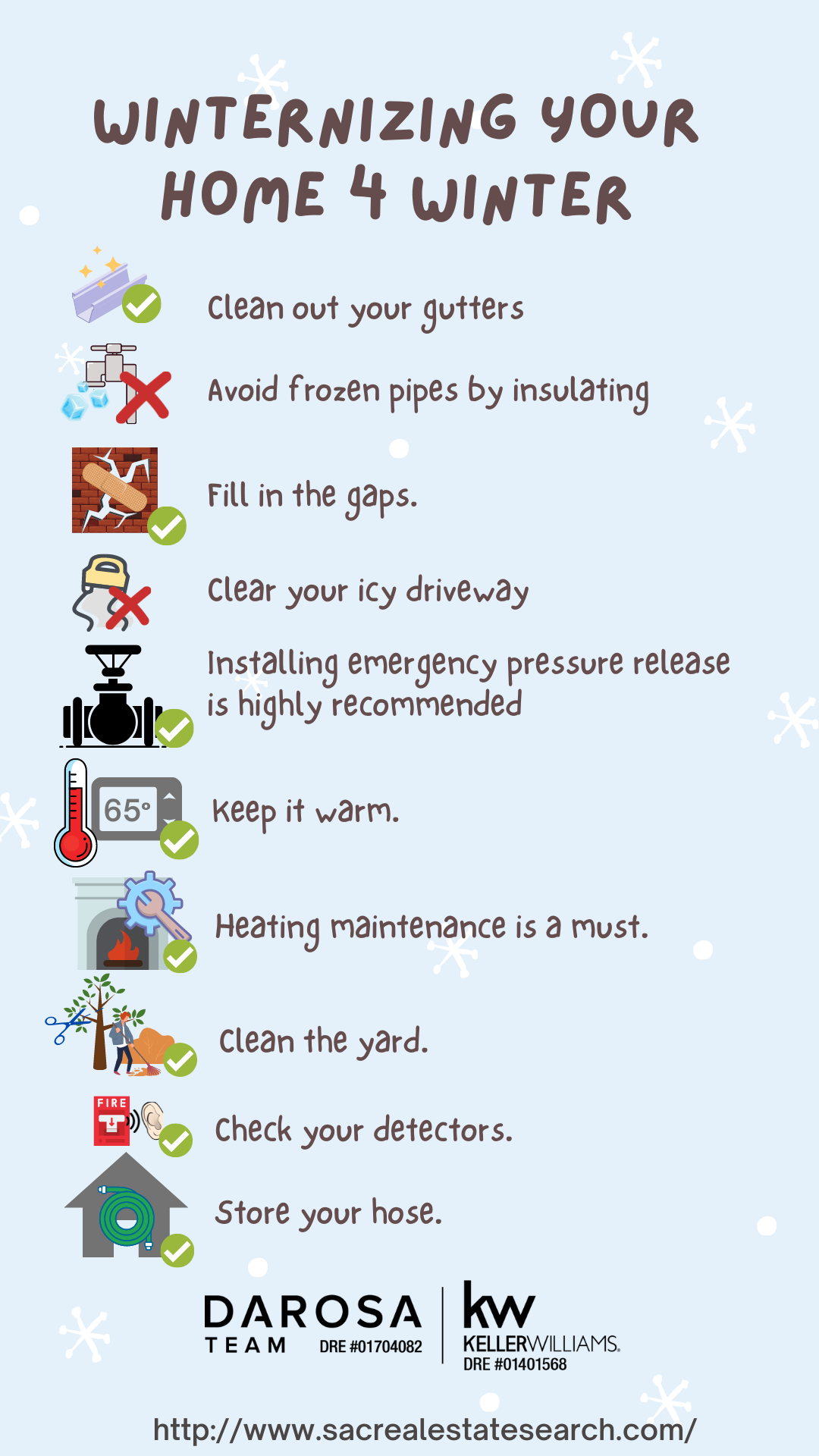
Clean out your GUTTERS.
Install gutter guards (if possible), and make sure your attic floor is properly insulated to avoid ice dams. The attic should be well-ventilated and approximately 10 degrees warmer than the outdoor temperature.
Avoid frozen pipes by insulating
Insulate pipes that may be susceptible to freezing to avoid them freezing. Keep a stream of water running in a few faucets during cold spells to prevent them from freezing and bursting.Fill in the gaps.
To help prevent cold air from seeping in, caulk around holes and openings. Install weather stripping and seals around windows, doors, air conditioners, and mail chutes, among other things.Clear your icy Driveway.
Clear ice and snow from driveways and walkways, and fix any broken stairs or handrails.Installing emergency pressure release is highly recommended.
In your plumbing system, consider installing an emergency pressure release valve. This will protect the pipes from bursting due to increased pressure created by frozen pipes. It's also advisable to know how to turn off the water and where your pipes are.Keep it warm.
Set your thermostat for at least 65 degrees and make sure your house or apartment is well-insulated.
Heating maintenance is a must.
To avoid any further problems, and to keep your heating efficiently working throughout this cold season. Make sure to have your furnaces, boilers, and chimneys serviced at least once a year.
Clean the yard.
Trim your trees and clear your yard from all unnecessary obstructions. It’s to prevent future accidents caused by branches falling out from trees due to the cold & windy weather. Plus your yard will look good.Check your detectors.
House fires are more prevalent in the winter, therefore it's critical that all of your smoke detectors are functional. Check them at least once a month and replace the batteries as needed. To avoid mistakenly trapping this hazardous gas in your house, consider installing a carbon monoxide monitor.
Store your hose.
All garden hoses should be disconnected, drained, and stored. Close the valves and wrap the faucet in insulation.
Now that you’re all set! You can now spend your holidays safely and cozied up in your winter protected abode.
For contractors recommendation or any question regarding your home feel free to call the DaRosa team!
References:
- Insurance Institute for Business & Home Safety (IBHS)
- Insurance Information Institute
- Grange Insurance